

A LoRA catalogue
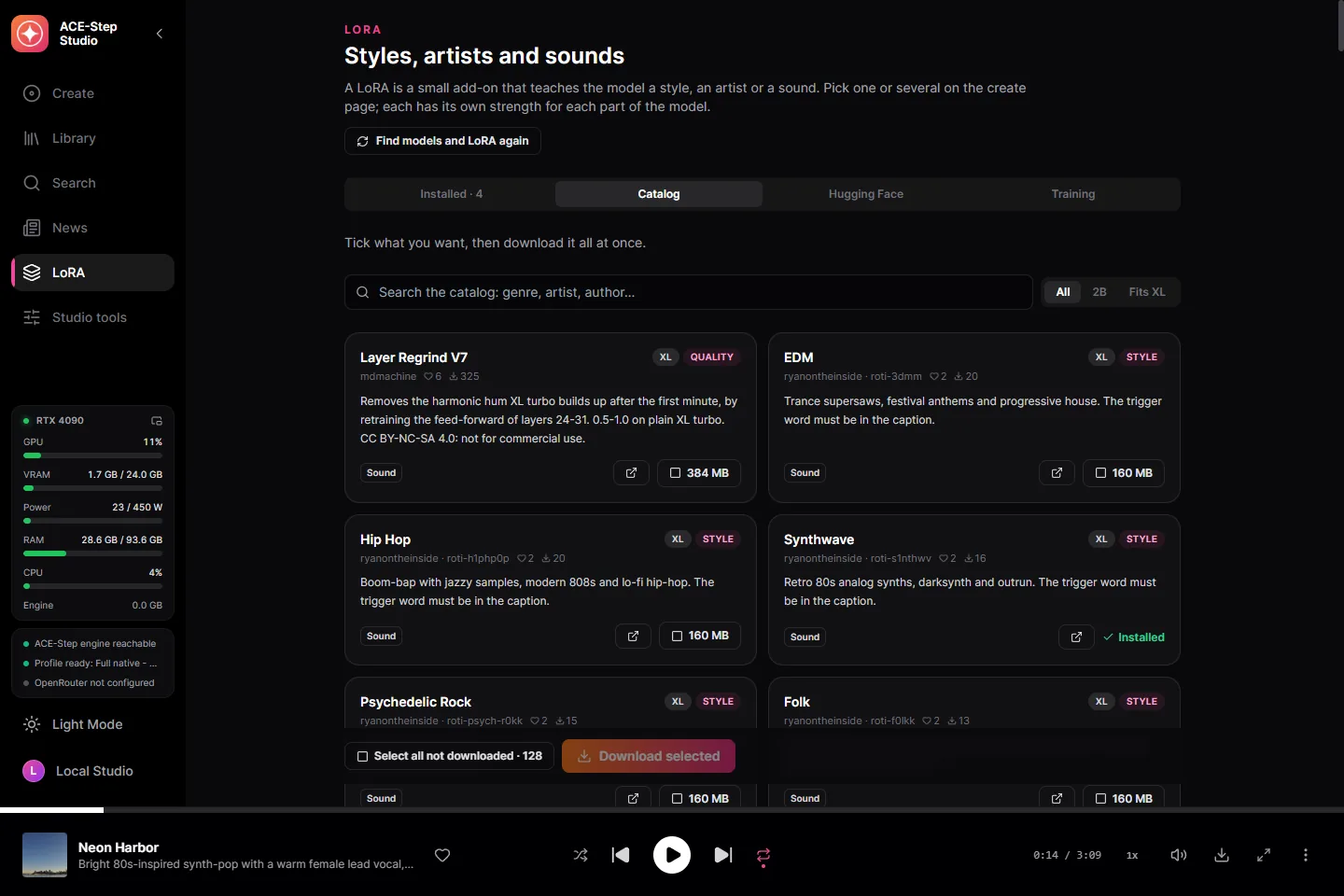
131 LoRA picked from Hugging Face by likes and downloads, described and credited, and a search of everything Hugging Face has — every file checked for the model size it fits before it downloads.
A desktop studio for ACE-Step 1.5, the open music model that writes and sings full songs.
Windows 10/11 x64 and an NVIDIA GPU with 4 GB of VRAM or more (GTX 900 or newer). The models are downloaded from inside the studio when you decide to.
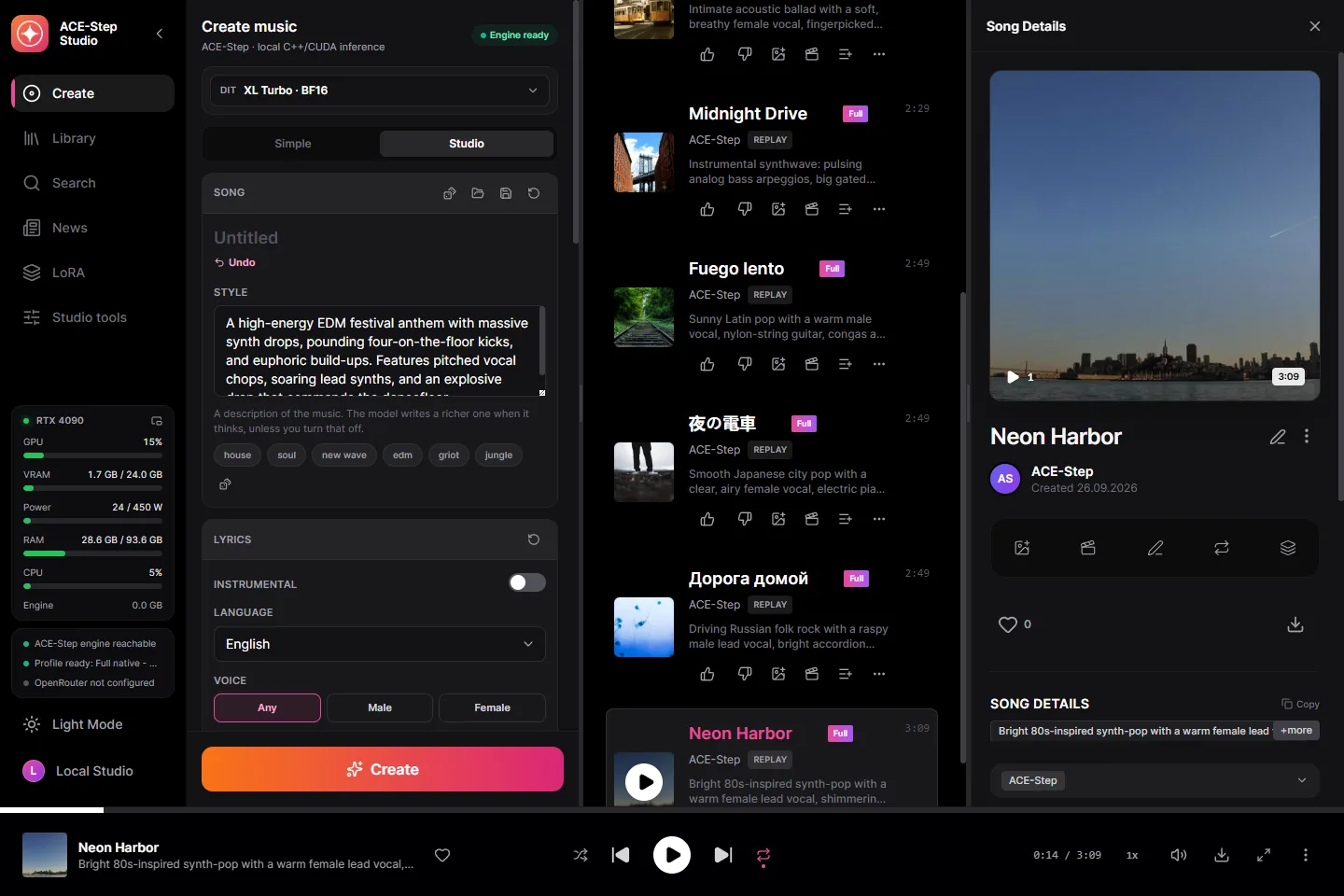
Rendered on a clean install of the released build, as the studio saved them.
131 LoRA picked from Hugging Face by likes and downloads, described and credited, and a search of everything Hugging Face has — every file checked for the model size it fits before it downloads.
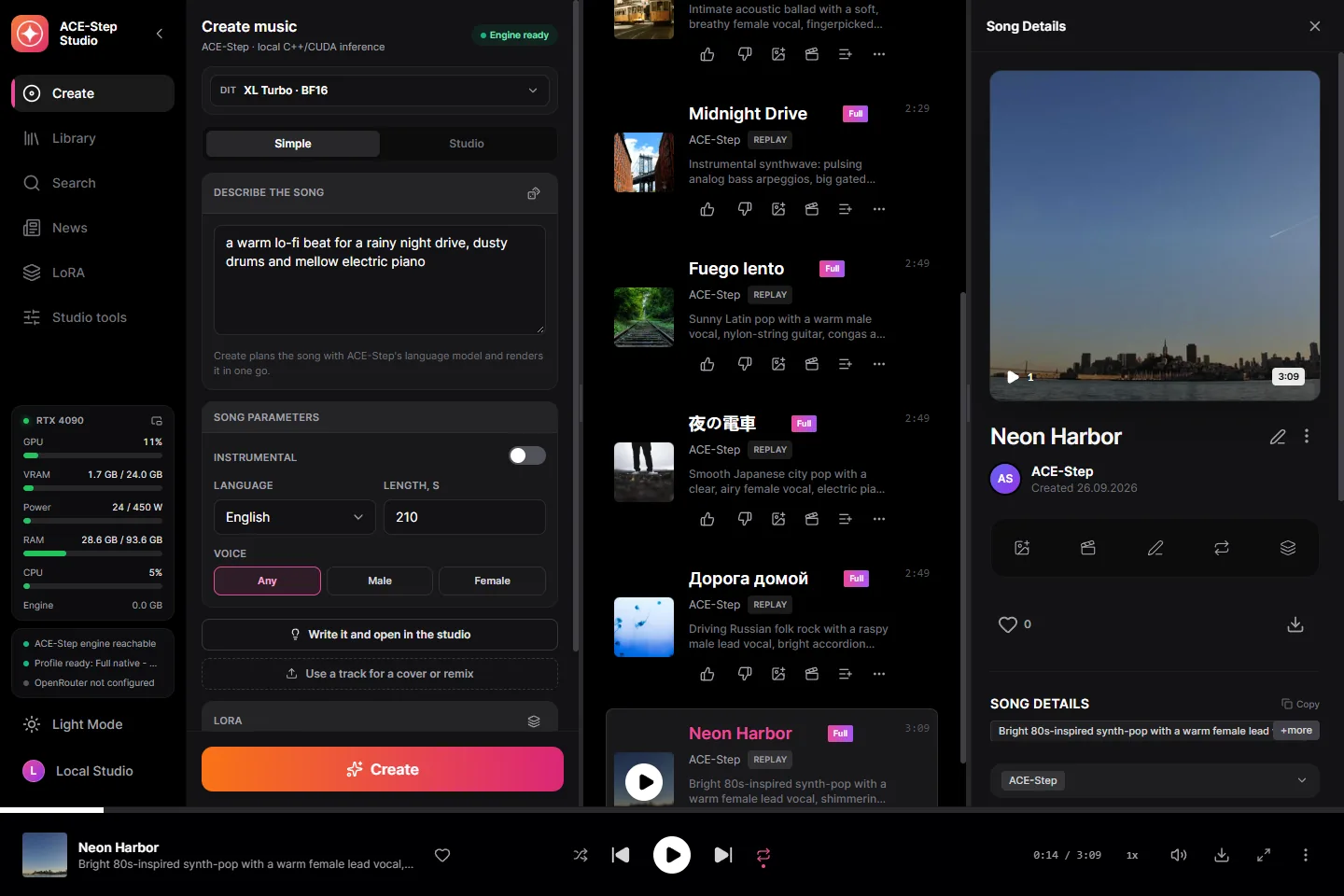
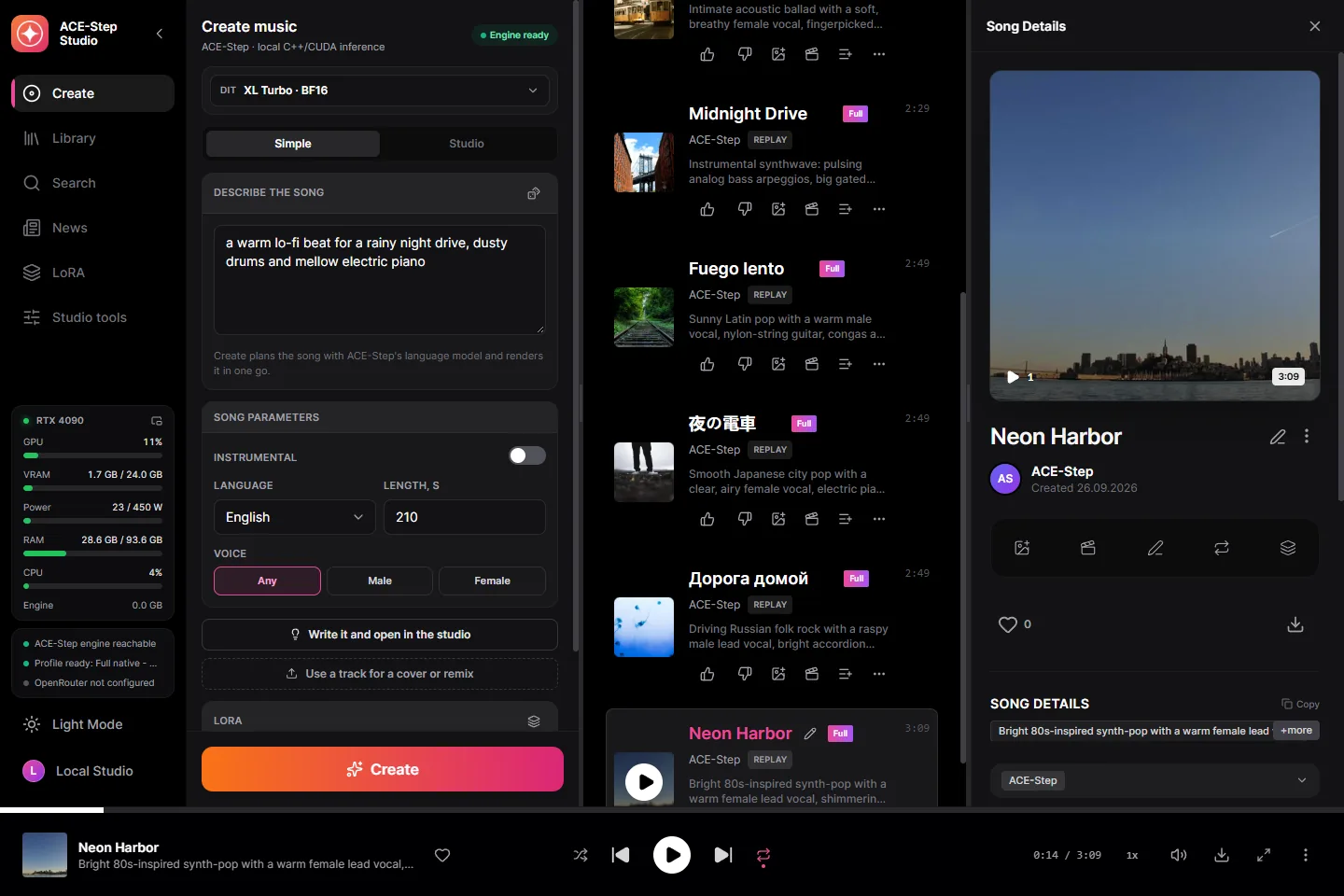
The simple form: an idea in, a finished song out.
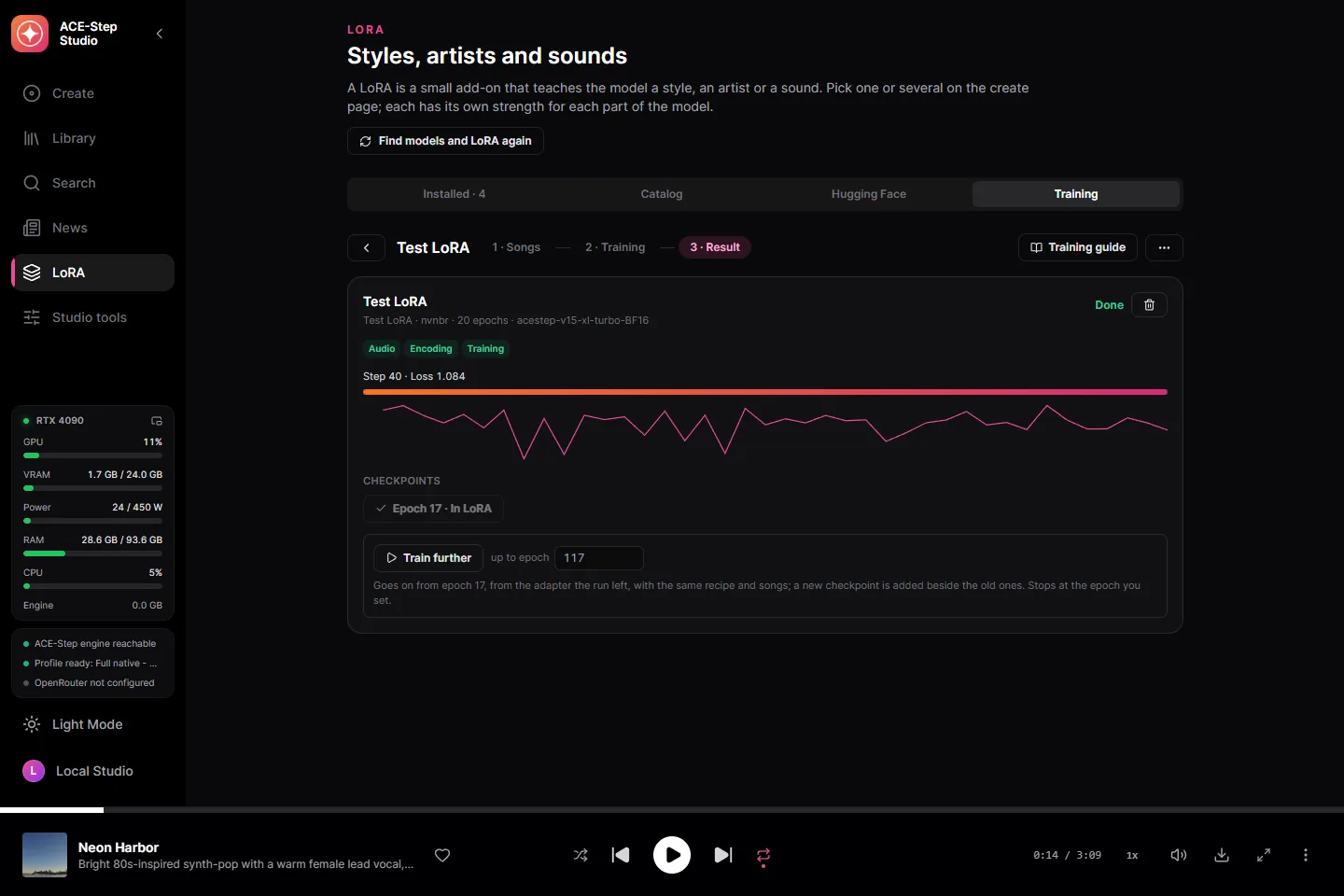
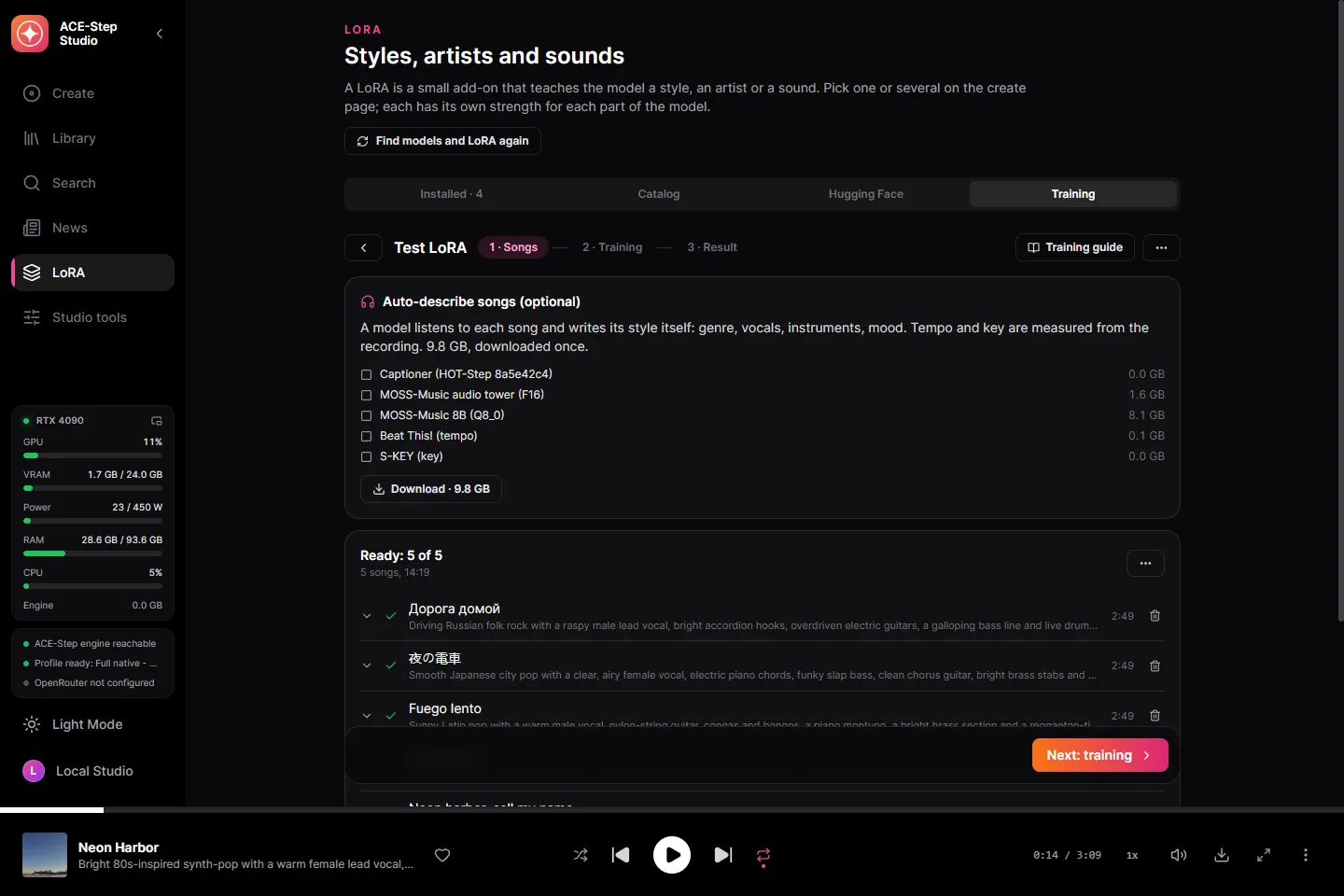
Songs of one artist or style become a LoRA on your card with HOT-Step's trainer and its LoKR recipe.
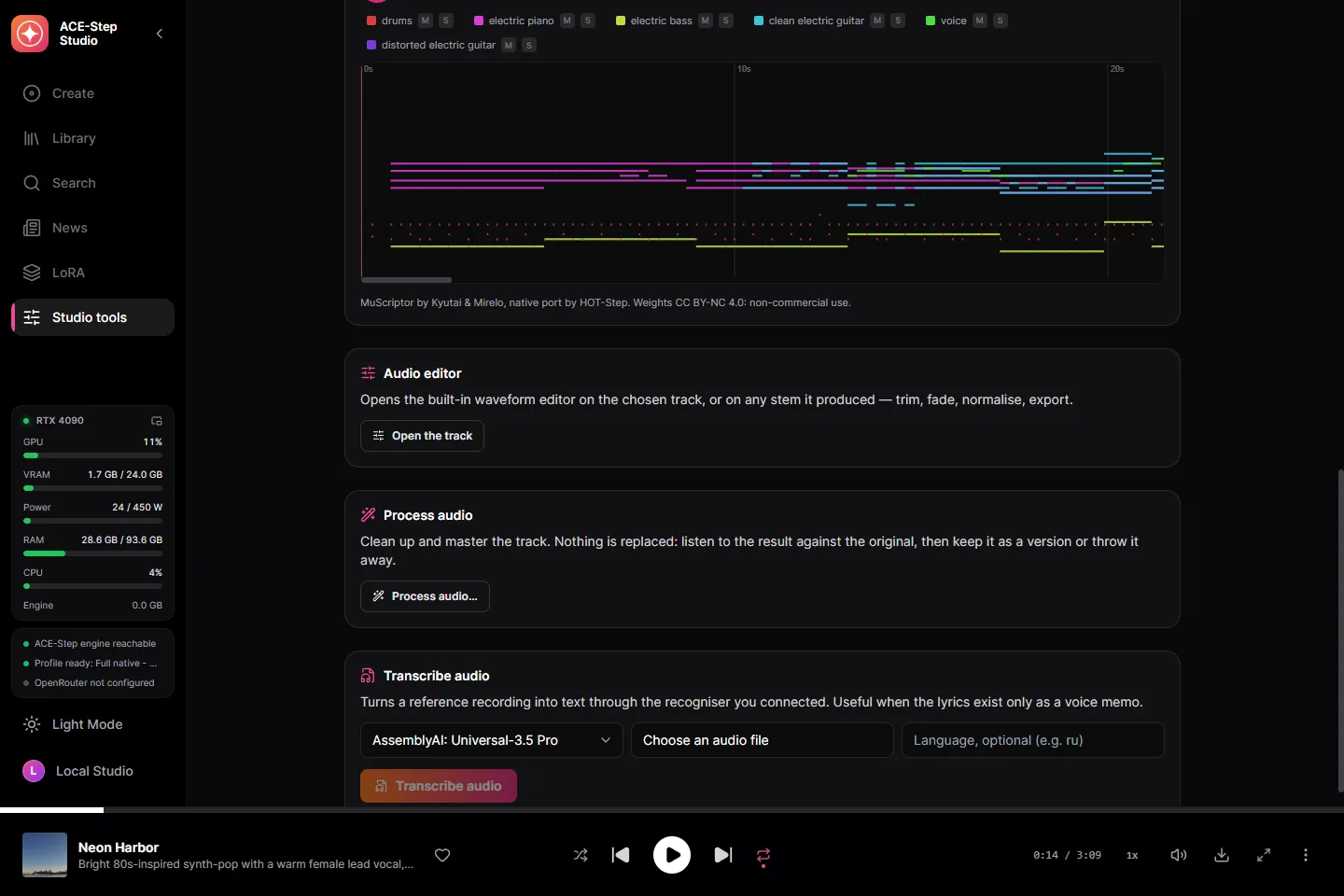
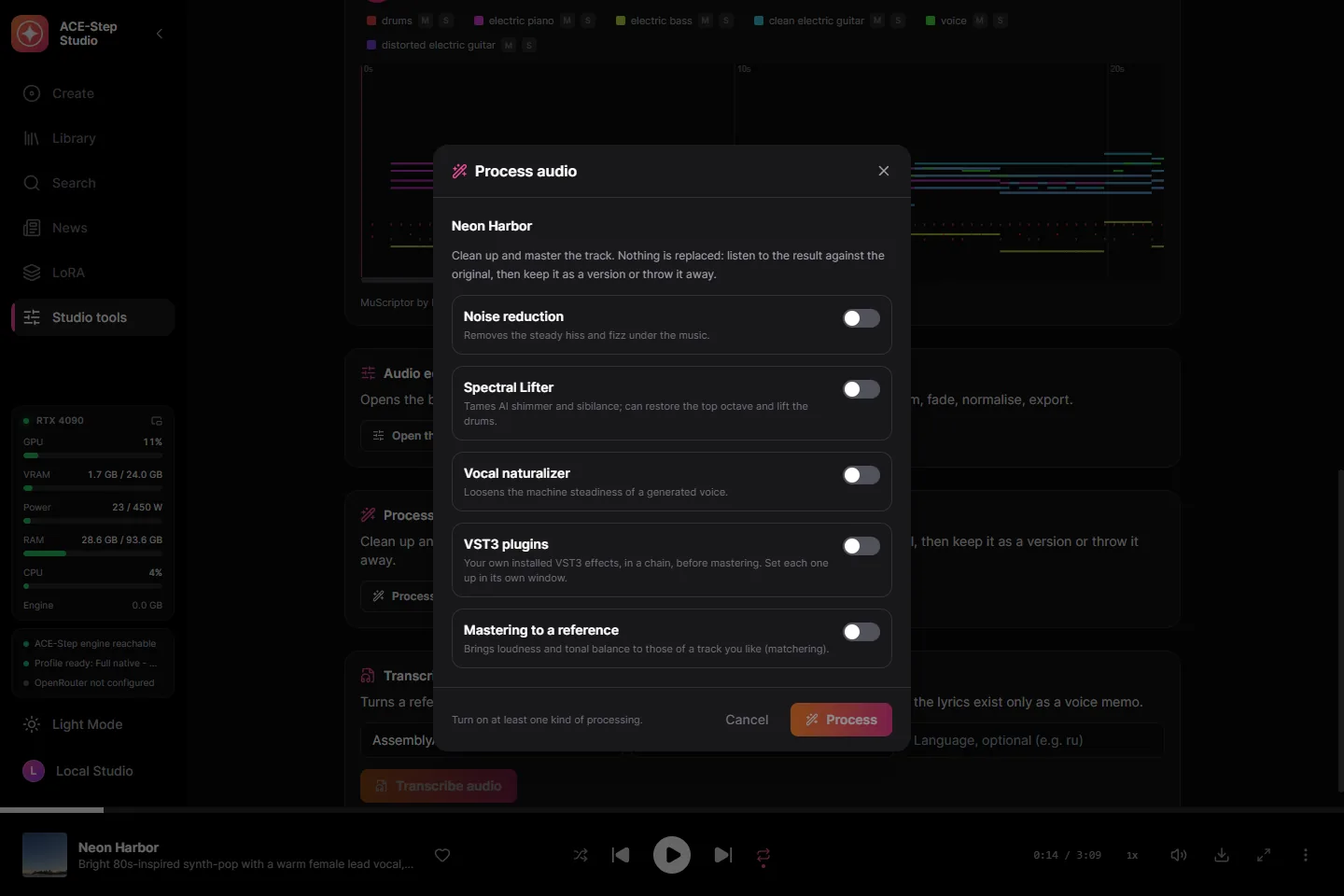
Six stems with HT-Demucs; any track to multi-instrument MIDI with MuScriptor, with a piano roll played against the original.
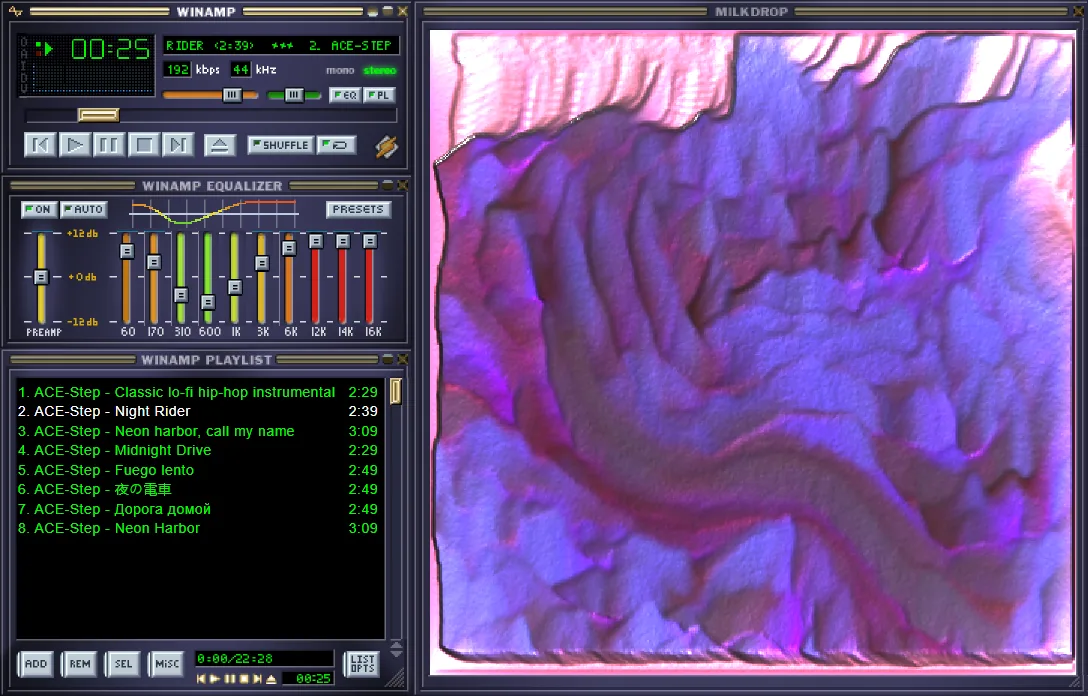
A ten-band equalizer on Winamp's frequencies with its presets and .EQF files; MilkDrop with hundreds of presets or a spectrum in ten looks; and a Winamp mode whose windows move apart, dock and resize, in the original skin or any from the Winamp Skin Museum.
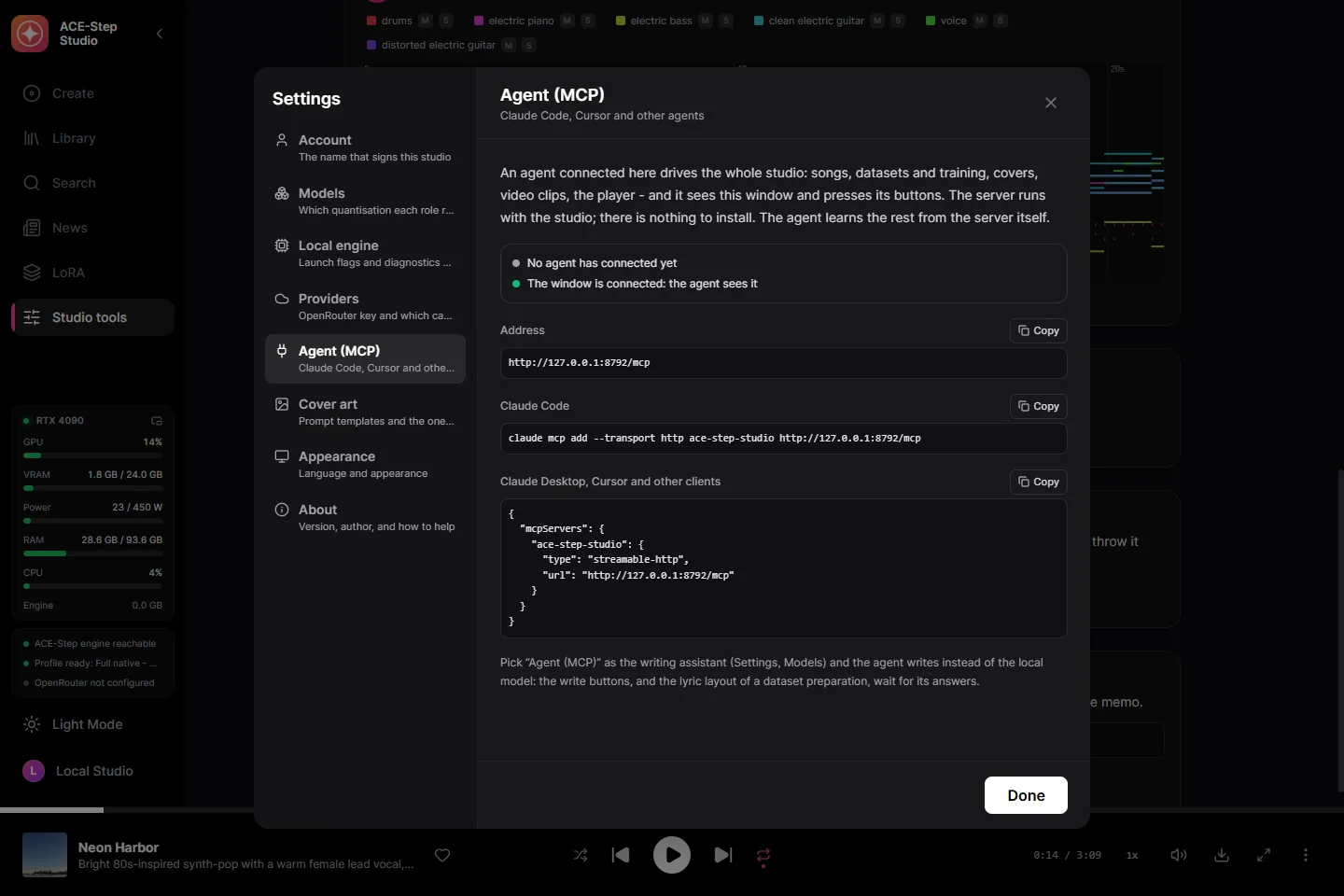
Connect Claude Code, Claude Desktop or Cursor and the agent does everything the studio does — 164 tools — and sees and works its window.
The studio itself, in your language.
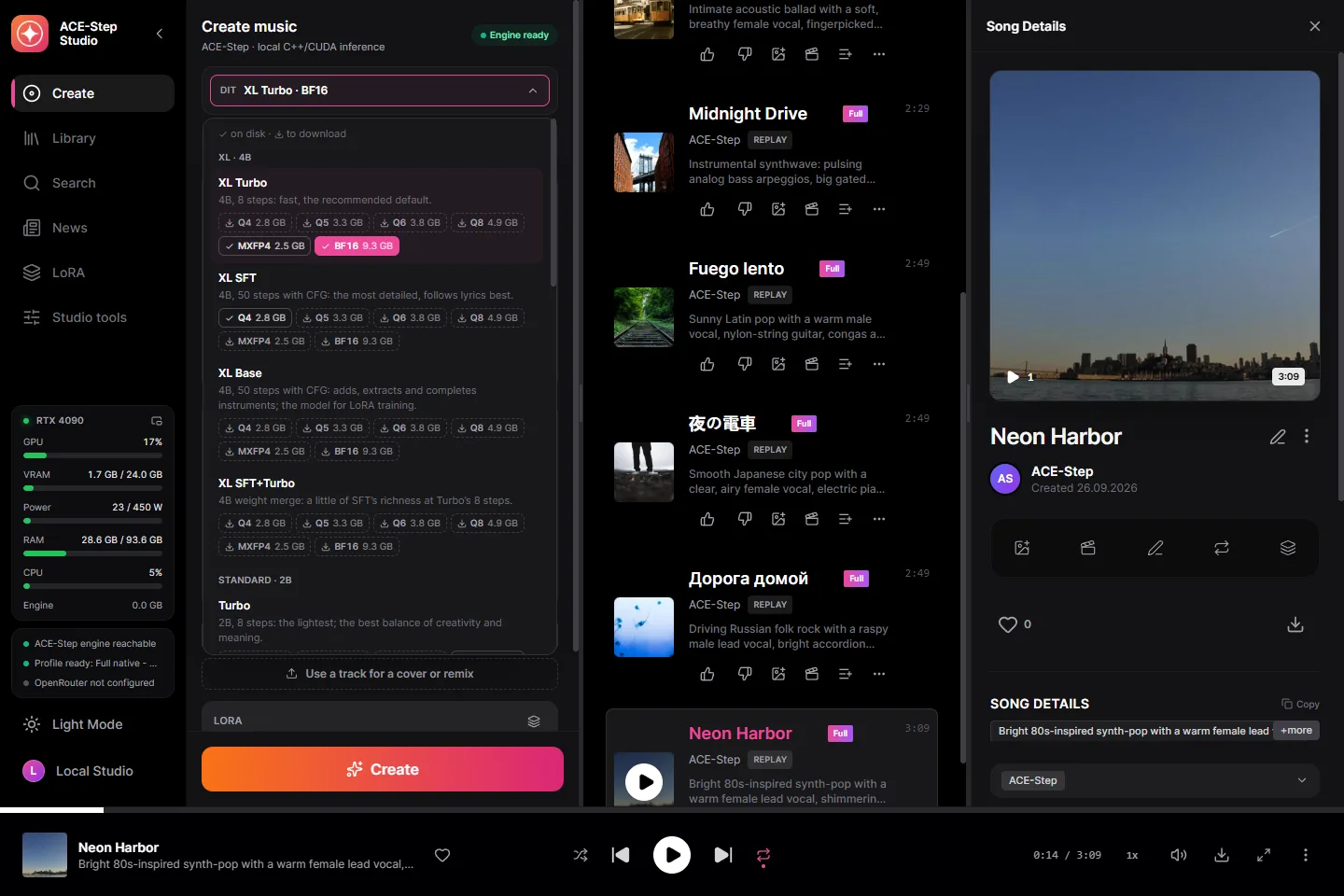

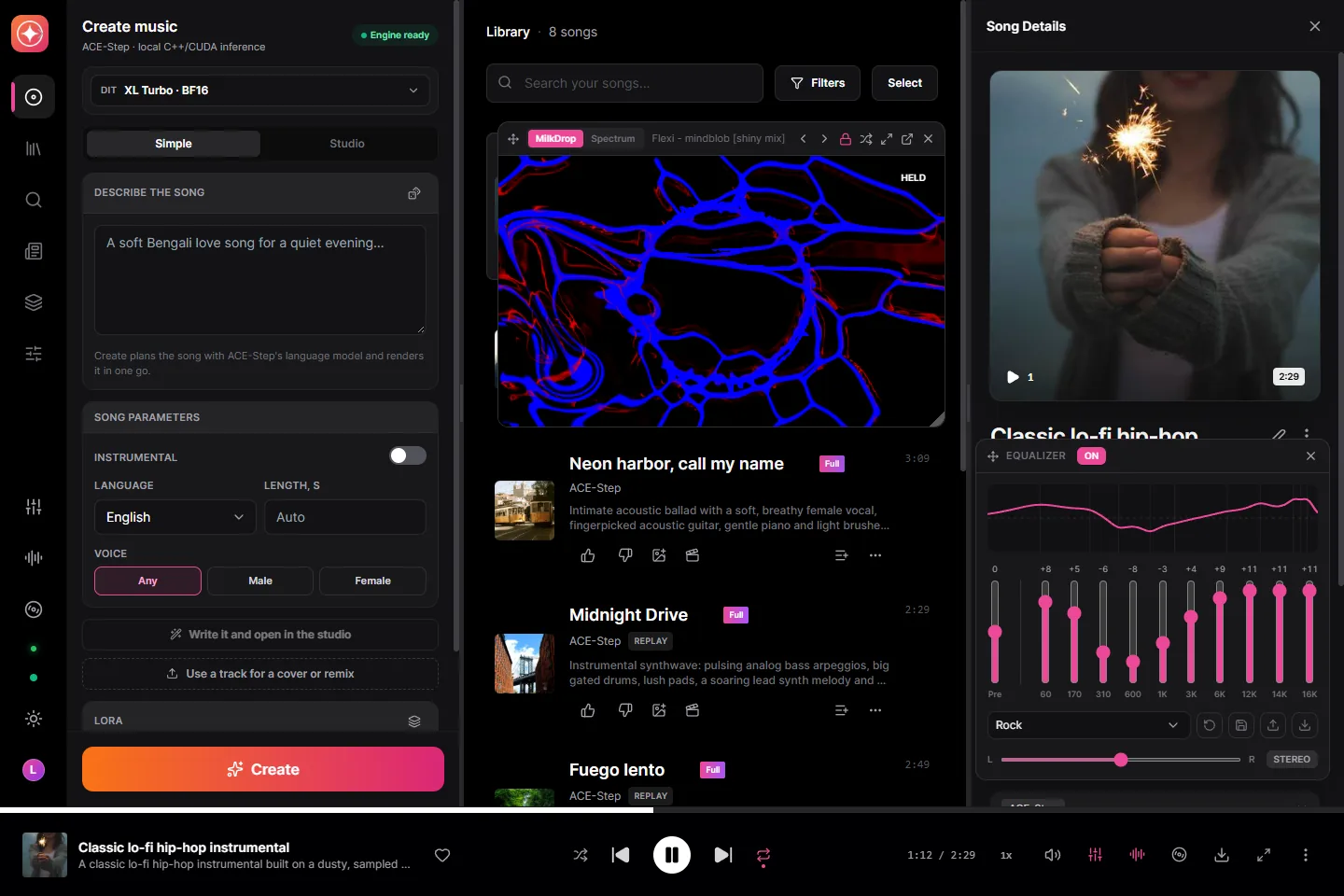
Windows 10/11 x64 and an NVIDIA GPU with 4 GB of VRAM or more (GTX 900 or newer). The models are downloaded from inside the studio when you decide to.
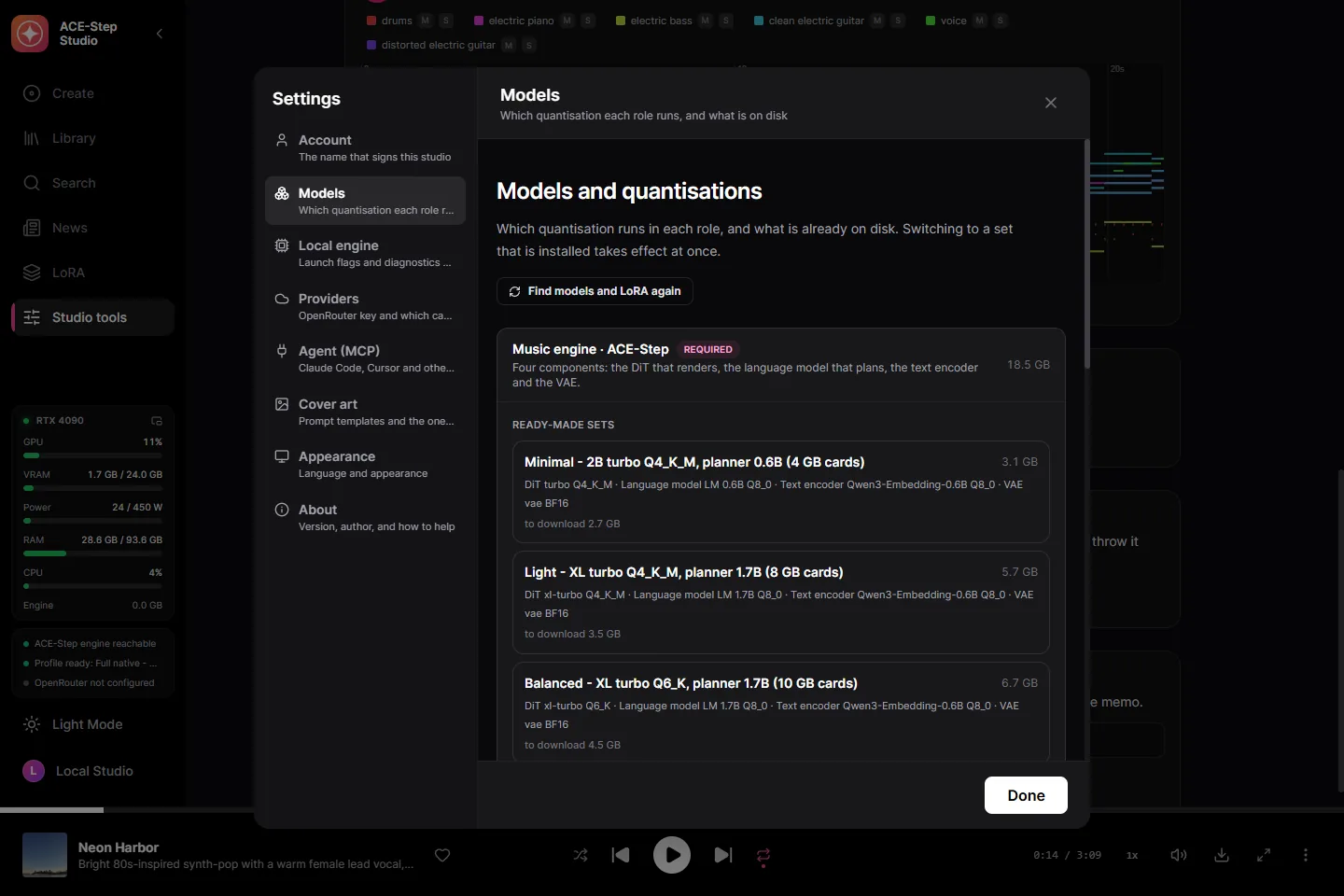
A runnable set is the DiT, the planner, the text encoder and the VAE, all in GGUF.
| Your GPU | Set | Download |
|---|---|---|
| 24 GB | Full native — XL turbo BF16, planner 4B BF16 | 18.5 GB |
| 13 GB+ | Quality — XL turbo Q8_0, planner 4B Q8_0 | 10.1 GB |
| 10 GB+ | Balanced — XL turbo Q6_K, planner 1.7B | 6.7 GB |
| 8 GB+ | Light — XL turbo Q4_K_M, planner 1.7B | 5.7 GB |
| 4 GB+ | Minimal — 2B turbo Q4_K_M, planner 0.6B | 3.1 GB |
The studio preselects the set your card can run, but the download is always your decision. Every file is checked by SHA-256 against a pinned Hugging Face revision, and an interrupted download resumes.
Yes. The studio is free and open source, and the models download for free from inside it.
Your music is yours, and it stays on your disk.
The studio, acestep.cpp and ACE-Step 1.5 are MIT. The Regrind fine-tune is CC BY-NC-SA 4.0; each catalogue LoRA carries its author's licence.
Songs of one artist or style become a LoRA on your card with HOT-Step's trainer and its LoKR recipe. Every setting is editable, and each checkpoint goes to the LoRA library in one click.
Connect Claude Code, Claude Desktop or Cursor and the agent does everything the studio does — 164 tools — and sees and works its window. ACE-Step's writing rules come with it, so the agent writes the songs itself.
Local by default. A cloud key is added by you, for the capability you choose.
| Part | Runs | Size |
|---|---|---|
| ACE-Step engine (acestep.cpp) | Your GPU: CUDA, Vulkan or the processor | bundled |
| ACE-Step model set | Your GPU | 3.1–18.5 GB |
| NVIDIA cuBLAS | NVIDIA cards only | 391 MB, once |
| Karaoke timings — Parakeet or Whisper | Your machine | optional |
| Stem separation — HT-Demucs | Your GPU or CPU | optional |
| Writing assistant | Local Gemma or OpenRouter | optional |
| LoRA trainer — HOT-Step ace-train | An NVIDIA RTX card | 0.1 GB + the BF16 DiT, optional |
| Describing songs by ear — MOSS-Music-8B | about 12 GB of VRAM | 9.8 GB, optional |
| Audio to MIDI — MuScriptor (HOT-Step ace-midi) | NVIDIA GTX 16 / RTX 20 or newer | 0.5–5.6 GB, optional |
| VST3 host — HOT-Step | Your machine, a process of its own | bundled |
The service is compiled into the desktop binary and supervises the C++ engine. Finished songs are imported by the service itself, so a result survives a reload or a closed window.
React UI ─┐
          ├─ ACE-Step-Studio.exe   (Tauri window + Rust/Axum service)
Rust axum ┘        │
                   └─ acestep.cpp `ace-server`   (C++/GGML, GGUF)